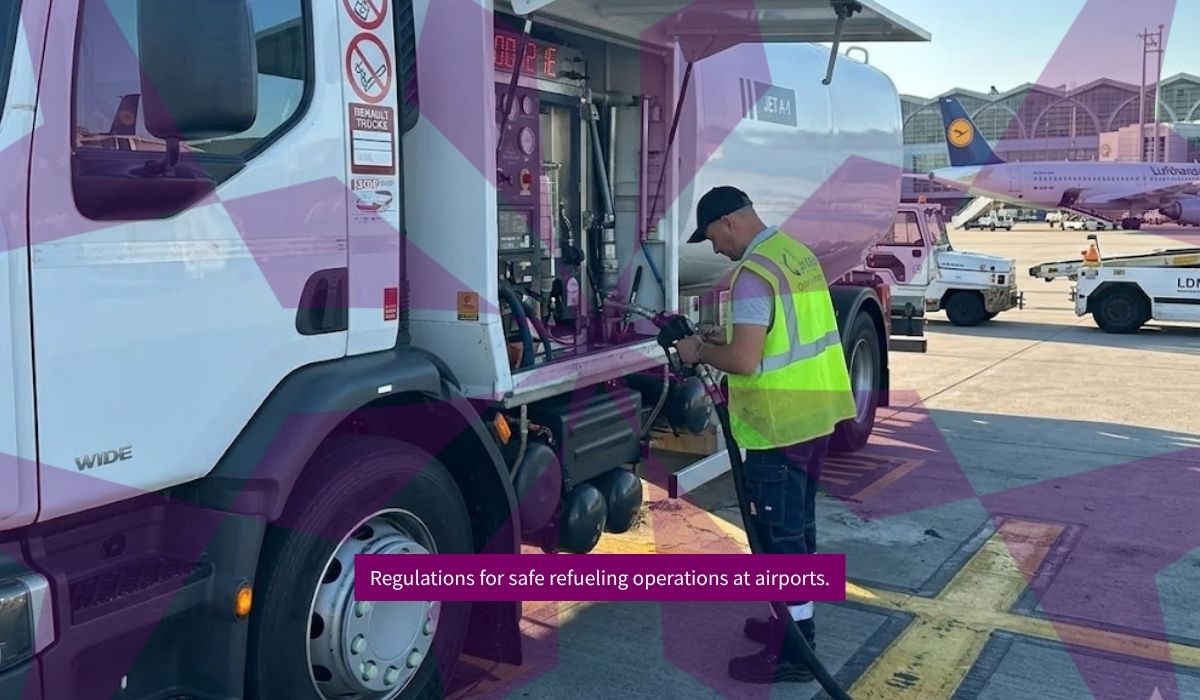
Regulations for safe refueling operations at airports.
By Adam j, Aviation Ground Ops Correspondent
May 2026 · 8 min read
Aviation Safety / Ground Operations
Aircraft refueling is one of the most safety-critical operations on any airport ramp. It happens thousands of times a day around the world, and yet most passengers have no idea how strictly it’s regulated – or how much can go wrong if those rules aren’t followed to the letter.
Let me be clear upfront: refueling isn’t just “putting gas in a plane.” The fuels involved Jet-A, Avgas 100LL, and others are highly flammable, sometimes pressurized, and handled right next to aircraft packed with passengers or fuel-soaked cargo. The margin for error is essentially zero.
Over the years, international bodies like ICAO (the International Civil Aviation Organisation) and national regulators like the FAA and EASA have built up an extensive framework of rules. In this article, I’ll walk you through the main ones who’s responsible, what the actual procedures are, and why they exist.
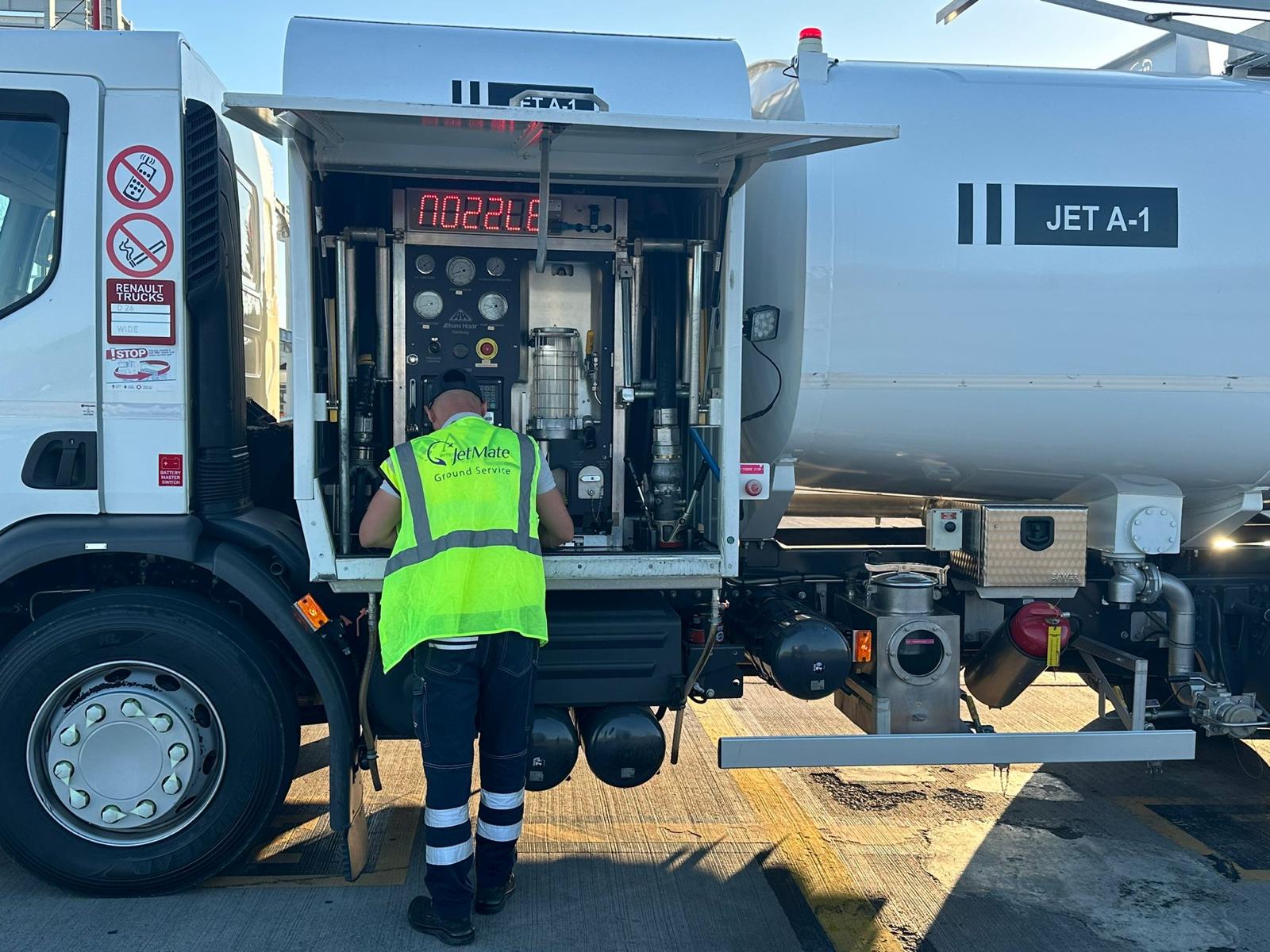
Who makes the rules?
This is actually a bit more complicated than most people realise. There’s no single global authority for refueling safety. Instead, you’ve got a layered system:
| Level | Standard / Body |
|---|---|
| International | ICAO Annex 14 |
| United States | NFPA 407 |
| Europe | EASA / EN 2 |
| Industry | IATA AHM / JIG |
ICAO sets the broad international standards. Individual countries then translate those into national regulations. On top of that, organizations like the Joint Inspection Group (JIG) publish detailed best-practice guidelines that most major airlines and fuel suppliers follow voluntarily though in practice, “voluntary” often just means “not legally mandated but you’ll lose your contract if you don’t comply.”
Airport operators add their own layers too. A big international hub like Frankfurt or Dubai will have its own fuel farm safety manual that runs to hundreds of pages.
The bonding and grounding thing , why it matters so much
If you’ve ever watched a fuel truck pull up to an aircraft, you might have noticed the fueler doing something that looks pretty tedious before they even open a fuel cap: attaching cables. This isn’t just a habit. It’s one of the most critical steps in the entire operation.
Aircraft build up static electricity during flight friction from the air, movement of fuel through pipes, even passenger movement can contribute. If that static discharges as a spark when a fuel nozzle touches the aircraft, you’ve got an ignition source right next to a vapor cloud. That’s how accidents happen.
“Static bonding between the refueling vehicle and the aircraft must be established before any fuel cap or coupler is opened no exceptions, regardless of time pressure or weather conditions.”
Grounding is slightly different: it connects the aircraft (or fuel truck) to the earth itself, so any charge bleeds away harmlessly. Bonding equalises potential between the two vehicles, so there’s no spark when they touch. Both steps are required under NFPA 407 and ICAO Doc 9977, and both need to happen before a single fuel cap is removed.
Fuel quality and contamination checks
Wrong fuel, contaminated fuel, or water-contaminated fuel have all caused fatal accidents. The regulations around fuel quality are therefore extremely strict.
Before any uplift, refueling personnell are required to:
First, drain a sample from the fuel truck’s sump and inspect it visually. The fuel should be clear and bright for Jet-A, with no cloudiness (which indicates water contamination) and no visible particles. Then check that the correct fuel type is being used putting Avgas into a jet turbine, or Jet-A into a piston engine, are both catastrophic scenarios that have happened in real life. Documentation must confirm the fuel’s batch number, density, and chain of custody.
⚠ Note: Misfuelling loading the wrong fuel type remains one of the most persistent hazards in general aviation. Most GA accidents involving fuel are due to Jet-A being loaded into piston aircraft that require Avgas. Colour coding, dedicated nozzle sizes, and pre-fueling checks are all layers of protection against this.
The “no smoking, no phones” rule and why phones are actually fine now
For decades, “no mobile phones during fueling” was considered gospel. The fear was that phone RF emissions could ignite fuel vapours. The reality, based on extensive testing, is that modern mobile phones don’t produce sufficient energy to ignite aviation fuel the risk was always pretty theoreticall overblown.
Most major regulators and airlines have quietly updated their policies. IATA’s guidance now acknowledges the phone risk is negligible. However and this is important smoking is absolutely still prohibited within a generous safety radius of any fueling operation. Open flames, lit cigarettes, sparks from tools: all of these remain real ignition hazards.
Passenger safety during fueling
Many airlines refuel with passengers on board, particularly during transit stops. This is permitted under strict conditions. The main requirements are: at least one cabin crew member must remain at a designated door with it armed and ready for evacuation; passengers must be informed; seat belts are typically unfastened to allow rapid egress; and no open flames are allowed in the cabin.
The crew also need to know where the fuel is being loaded you wouldn’t want a passenger to open an overwing emergency exit right next to an open fuel tank being pressurized. Coordination between the ground crew and cabin crew is a regulatory requirement, not just good practice.
Spill response and emergency procedures
Even with all the precautions, spills happen. A fuel spill on the ramp doesn’t automatically mean disaster, but the response needs to be immediate and coordinated.
Fueling must stop instantly. The aircraft’s APU is typically shut down. The area is cordoned off, and the airport fire service is notified most airports require notification even for small spills. Aviation fuel is also an environmental hazard, so containment and reporting obligations under environmental law apply on top of the safety regs.
Larger spills anything beyond a few litres typically require a full incident report and review by the airline’s safety department. There are defined thresholds in the airport operating manual that determine when you escalate to a major incident response.
Training requirements
Personnel who perform aircraft refueling must be trained and certified. The exact requirements vary by country and operator, but the common elements include: initial training covering fuel properties, bonding/grounding, equipment operation, and emergency procedures; regular refresher training (annually at most operators); practical assessment on actual equipment; and authorisation by a qualified supervisor before operating independently.
JIG and IATA both publish model training syllabuses that most reputable fuel suppliers use as a baseline. If you’re ever in a position where someone hands you a fuel hose with no training, you are well within your rights and probably legally obligated to refuse.
Frequently Asked Questions
Can an aircraft be refueled while the engines are running?
Generally, no not with conventional pressure refueling. However, some military and specialized operations use “hot refueling” (engines running during fuel uplift), which requires specialized training, equipment, and a completely different set of procedures. For commercial aviation, engines must be shut down before refueling begins in virtually all cases.
What’s the difference between overwing and underwing (pressure) refueling?
Overwing fueling is the familiar open-cap-and-pour method you’d see on small GA aircraft slower and more prone to spills. Underwing (pressure) refueling uses a sealed coupling under the wing and pushes fuel in under pressure, much faster and with less vapor exposure. Commercial jets almost exclusively use pressure refueling. Each method has its own bonding sequence and safety checks.
How close can ground vehicles get to the aircraft during fueling?
This is defined by the airport’s Ground Handling Manual and is typically tied to aircraft type. Fuel vehicles have designated parking positions marked on the ramp. The general principle is that no vehicle should be positioned in a way that would block an evacuation route, and a minimum clearance from aircraft exits is maintained. Usually around 6 metres from open exits, though the exact figure varies.
What happens if the wrong fuel is loaded?
It’s treated as a serious safety incident regardless of whether the aircraft has departed or not. If caught before departure, the aircraft is defueled and the fuel system is inspected per the manufacturer’s maintenance manual. If the aircraft has flown on wrong fuel (which has happened), it typically results in an immediate airworthiness review, possible engine inspection or replacement, and a full incident investigation. It’s also likely a regulatory notification event.
Are there specific weather conditions that halt fueling operations?
Yes. Lightning within a certain radius of the airport typically 5 nautical miles, but this varies by operator and country usually triggers a suspension of all fueling operations. Fueling in strong winds can also be restricted because wind increases vapor dispersion risk and can affect hose handling. Each operator’s procedures will define the exact thresholds. Some airports use lightning detection systems that automatically alert ground crews.
Who is ultimately responsible if something goes wrong during refueling?
This is actually a layered question with a complicated answer. Legal liability can fall on the fuel supplier, the ground handling company, the airline, the airport operator, or the individual technician sometimes all of the above simultaneously. Most jurisdictions have specific frameworks for aviation accidents. The investigation and regulatory response will usually look at whether procedures were followed, whether training was adequate, and whether there were systemic failures at any level. Practically speaking, multiple parties usually bear some responsibility.
How is fuel quantity actually measured and verified?
Commercial aircraft are typically fueled to a specific weight (in kilograms), not volume because fuel density changes with temperature. The fuel order from the dispatcher specifies a fuel weight. The fuel truck’s meter records volume delivered, and a density measurement converts that to mass. The fueler and the flight crew both verify the final fuel state using the aircraft’s own fuel gauges and a signed fuel receipt. Both signatures are required before the paperwork is complete.