What services are included in full-service aircraft ground support?
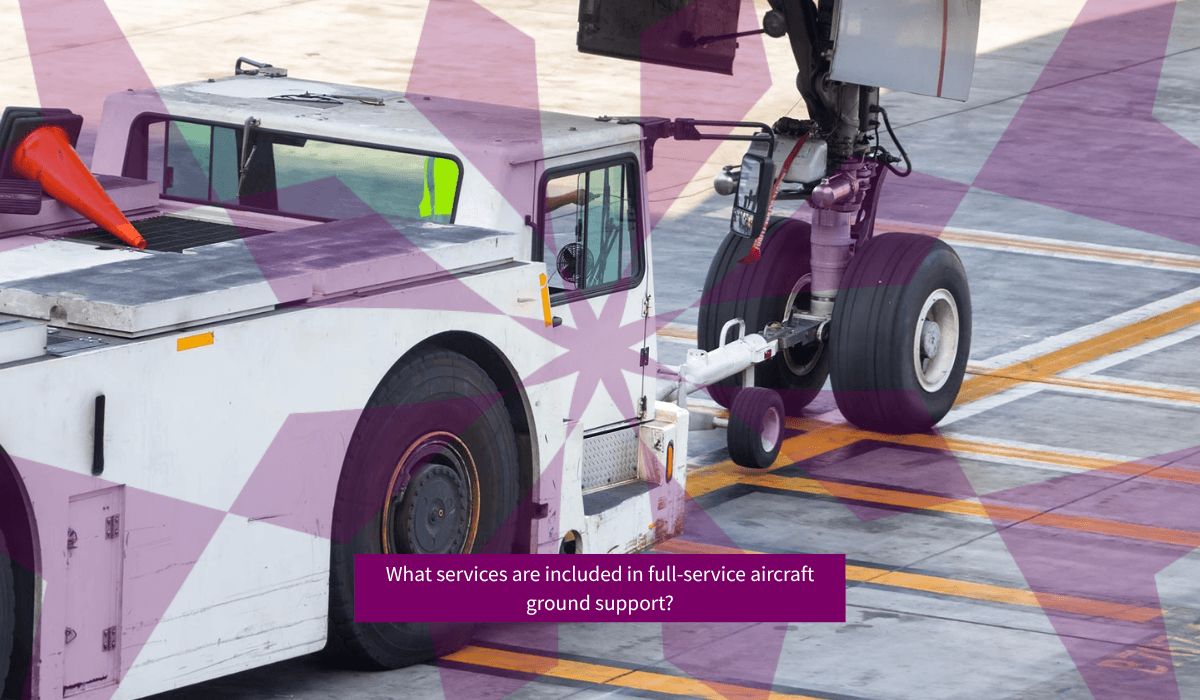
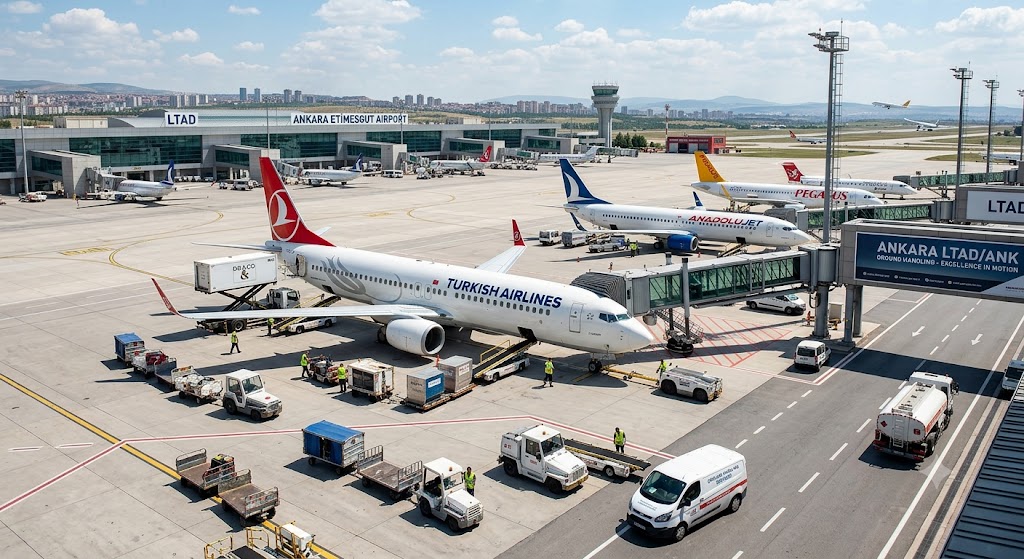
If you’ve ever watched a commercial or private jet pull up to an FBO and wondered what happens in those 45 minutes before it takes off again you’re looking at ground support in action. Dozens of coordinated tasks happen simultaneously, each one essential to a safe and on-schedule departure. But for charter operators, business aviation managers, and private jet owners, the question isn’t just what ground support involves it’s whether the handler you’ve chosen can deliver all of it, seamlessly, under one roof.
This guide breaks down every service category included in full-service aircraft ground support, what to look for in a quality provider, and why the difference between a full-service and a piecemeal operation shows up in your turnaround times, your costs, and ultimately, your safety record.
What Is Full-Service Aircraft Ground Support?
Full-service ground support sometimes called a “full-service FBO” or “full-service ground handling” refers to a single provider managing every aspect of an aircraft’s ground phase: from the moment it lands to the moment it pushes back. Rather than sourcing fueling from one company, catering from another, and crew transport from a third, operators work with one coordinated team responsible for the entire turnaround.
The International Air Transport Association (IATA) defines ground handling as the services required to support an aircraft’s turnaround, encompassing ramp, passenger, cargo, and technical services. In practice, a truly full-service provider goes further handling pre-arrival planning, compliance documentation, and post-departure follow-up as well.
The Core Services: What’s Included
1. Fueling and Fuel Quality Management
Fueling is the most visible ground support task, but it’s also one of the most technically demanding. Full-service providers offer:
- Into-plane fueling for both jet-A and AvGas aircraft
- Fuel uplift coordination based on flight plans and weight & balance requirements
- Fuel quality checks density testing, water contamination sampling, and lab-backed fuel release certificates
- Fuel pricing and hedging guidance for frequent operators
Poor fuel quality is one of the leading preventable causes of aircraft incidents worldwide. A capable handler like JetMate coordinates directly with approved fuel suppliers and performs quality assurance checks before every uplift, not after.
2. Aircraft Towing and Marshalling
Moving an aircraft safely on the ramp requires certified equipment, trained personnel, and clear communication protocols. This includes:
- Pushback and tow-in operations using towbarless tractors or conventional towbar equipment
- Wing-walking and wingtip clearance during taxi and parking
- Marshalling guidance for both arrival and departure
- Overnight repositioning to hangar or remote stand
Marshalling errors are a significant contributor to ramp incidents. The Flight Safety Foundation publishes extensive resources on ramp safety, and operators choosing a ground handler should specifically ask about marshaller training certification and incident history.
3. Ground Power and Air Start Units
Aircraft sitting on the ramp need external power to run avionics, cabin systems, and pre-departure checks without draining the aircraft battery. Full-service providers supply:
- GPU (Ground Power Unit) connections for 28V DC and 115V/400Hz AC power
- Air Start Units (ASU) for engine starts in low-temperature or remote environments
- Pre-conditioned air (PCA) systems to maintain cabin temperature before boarding
4. Aircraft Cleaning and Cabin Services
For business aviation and private jet operators, presentation matters enormously. Full-service ground support includes:
- Interior cleaning vacuuming, surface wipe-down, lavatory service
- Exterior washing and windscreen cleaning
- De-icing fluid residue removal between turns
- Waste removal and potable water replenishment
- Linen refresh and cabin restocking for charter operators
JetMate’s cabin services teams are trained to work within tight turnaround windows without disrupting crew or passengers still onboard a detail that separates genuine full-service providers from basic handlers.
5. Catering Coordination
Ground support and catering are deeply connected. A full-service provider coordinates:
- Catering uplift from approved aviation caterers
- Cold storage and temperature-controlled delivery where required
- Crew meal and special dietary requirements
- Bonded catering for international flights
While some FBOs partner with third-party caterers, the best providers manage the whole process themselves, ensuring timing, food safety standards, and delivery documentation are handled as part of the single turnaround package.
6. Baggage and Cargo Handling
For private jet and charter operations, baggage handling means more than loading suitcases. It includes:
- Baggage screening coordination (for commercial-adjacent operations)
- Weight and balance input for loading plans
- Fragile and oversized item handling
- Dangerous goods (DG) identification and segregation per ICAO Technical Instructions
- Cargo build-up and breakdown for air freight clients
DG compliance in particular is non-negotiable mishandled lithium batteries, medical oxygen, and other restricted items have caused serious incidents. Your ground handler should be able to demonstrate trained and certificated DG acceptance staff.
7. Passenger Handling and VIP Services
In business aviation, the passenger experience on the ground is often as important as the flight itself. Full-service ground support covers:
- Meet-and-greet on arrival, including customs facilitation
- Dedicated VIP lounges and crew rest facilities
- Ground transportation coordination car hire, limousine, and helicopter transfers
- Customs and immigration document preparation for international arrivals
- Baggage escort and lost luggage follow-up
JetMate specializes in white-glove VIP handling for private and VVIP operations, where discretion, speed, and attention to detail are not optional extras but core deliverables.
8. Flight Planning and Permits
Most full-service FBOs and ground handlers offer integrated flight support, including:
- Flight plan filing via ICAO-standard systems
- Overflight and landing permits for international routing
- NOTAM and weather briefings coordinated with the crew
- Slot coordination for congested airports
- Navigation and handling fee reconciliation
Permit lead times for certain regions the Middle East, West Africa, Central Asia can be days or weeks. A ground handler with established relationships and a dedicated permits desk, like JetMate, dramatically reduces the risk of departure delays caused by missing documentation.
9. Aircraft De-Icing and Anti-Icing
In colder climates and winter operations, de-icing is a critical safety service, not an add-on. This involves:
- Type I, II, III, and IV fluid application per aircraft manufacturer requirements and holdover time charts
- Pre-departure inspection after fluid application
- Coordination with ATC for de-icing bay slot management
- Fluid recovery and environmental compliance
The FAA’s Aircraft Icing Resources and EASA guidelines govern de-icing procedures, and your handler should demonstrate full compliance not approximation.
10. Line Maintenance and AOG Support
Some ground handlers extend their scope to include light maintenance, which can be the difference between a minor snag and an extended AOG (Aircraft on Ground) situation. Services typically include:
- Pre-departure checks (PDC / walk-around support)
- Minor defect rectification tire changes, fluid top-ups, brake checks
- AOG coordination with approved Part-145 maintenance organizations
- Technical logging and MEL (Minimum Equipment List) consultation
Not every ground handler holds or coordinates maintenance approvals. It’s worth confirming specifically what technical support is available 24/7 at your intended stations.
11. Hangar and Parking
Securing the aircraft between flights is part of the ground handler’s responsibility:
- T-hangars, executive hangars, and heated bays for weather protection
- Security-monitored remote and apron parking
- Long-term and overnight parking coordination
- FOD (Foreign Object Debris) checks before and after parking
12. Crew ServicesCrews need ground support too. Full-service providers offer:
- Crew accommodation booking at approved crew hotels
- Airport transfers and transport on arrival
- Visa and immigration assistance for international crews
- Crew briefing room access and flight planning workstations
- Rest facility access for fatigue management compliance
Why Full-Service Matters: The Integration Advantage
The reason operators increasingly prefer a single full-service handler over assembling services piecemeal comes down to three things: accountability, communication, and speed.
When eight different vendors are involved in a turnaround, communication breaks down. The catering arrives late; the fueler didn’t know about the aircraft change; the GPU operator is handling another ramp. A full-service provider like JetMate operates with a single coordination desk that manages the entire sequence every service knows what every other service is doing, in real time.
According to Boeing’s Ground Operations Safety data, a significant percentage of ground damage incidents involve coordination failures between separately contracted ground service providers. Integration isn’t a luxury it’s a safety mechanism.
What to Ask Before Choosing a Ground Handler
When evaluating a full-service provider, go beyond the brochure. Ask these questions:
- What IATA ISAGO or local authority certifications do you hold? The IATA Safety Audit for Ground Operations (ISAGO) is the global benchmark.
- What is your average turnaround time for a midsize business jet?
- Do you have 24/7 operations, or does coverage drop overnight and on weekends?
- How do you handle AOG situations outside business hours?
- Can you provide fuel quality certificates for each uplift?
- What is your incident and near-miss reporting process?
A handler that hesitates on any of these isn’t a full-service provider they’re a partial one.
Related reading:
- IATA Ground Handling Manual (IGOM)
- ICAO Airport Services Manual
- Flight Safety Foundation — Ground Accident Prevention
© JetMate Aviation Services – jetmate.aero